Introduction
In the ever-evolving world of artificial intelligence, reinforcement learning (RL) stands out as a powerful method for teaching agents to make decisions in complex environments. One of the intriguing challenges in the realm of RL is Gymnasium's Car Racing environment, a continuous control task that requires agents to navigate a race track efficiently. This environment poses unique challenges, including high-dimensional observation spaces and the need for precise control actions.
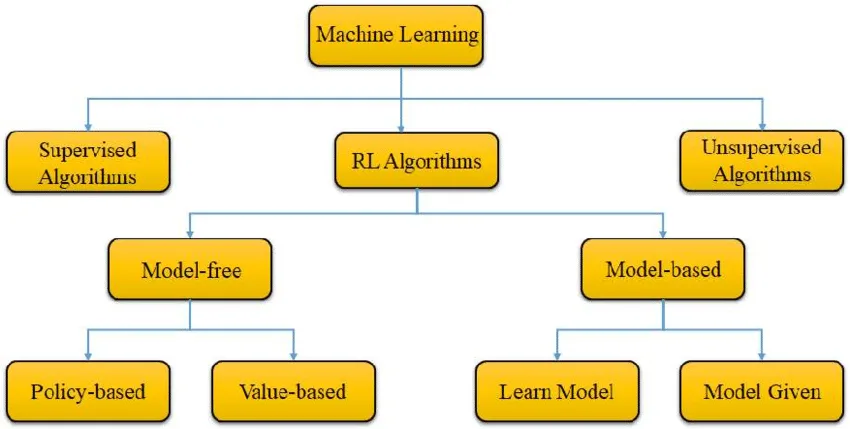
In this blog post, we dive into the exciting process of solving the Car Racing environment using three prominent RL algorithms: Soft Actor-Critic (SAC), Proximal Policy Optimization (PPO), and Deep Q-Network (DQN). Each of these algorithms has its own strengths and weaknesses, making them ideal candidates for a comparative study.
We'll explore the theoretical foundations of each algorithm, discuss their implementation, and analyze their performance in the Car Racing environment. By the end of this journey, you'll gain insights into the nuances of each approach and understand how they handle the challenges posed by continuous action spaces and dynamic environments. Whether you're a seasoned RL practitioner or a curious newcomer, this exploration promises to deepen your understanding of reinforcement learning and its application to complex control tasks.
Car Racing Environment & Reward
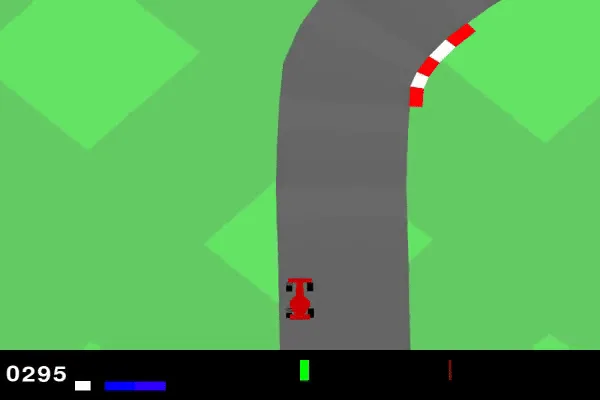
The CarRacing-v3 environment in Gymnasium is a continuous control task where the agent controls a car on a procedurally generated racetrack. The objective is to navigate the car around the track as efficiently as possible, minimizing time off-track and maximizing the number of tiles covered. The environment presents a challenging problem due to its continuous state and action spaces, requiring precise control to avoid going off the track.
The reward system in CarRacing-v3 primarily incentivizes the agent to stay on the track by awarding positive rewards proportional to the number of track tiles it covers. The typical reward for each tile is +1000/N, where N is the total number of tiles. If the car goes off the track, the agent stops receiving positive rewards, which indirectly penalizes the behavior. The episode ends if the car spends too much time off the track or successfully covers all the track tiles. This reward structure encourages the agent to drive smoothly, avoid time off-track, and maximize coverage of the racetrack.
Proximal Policy Optimization (PPO)
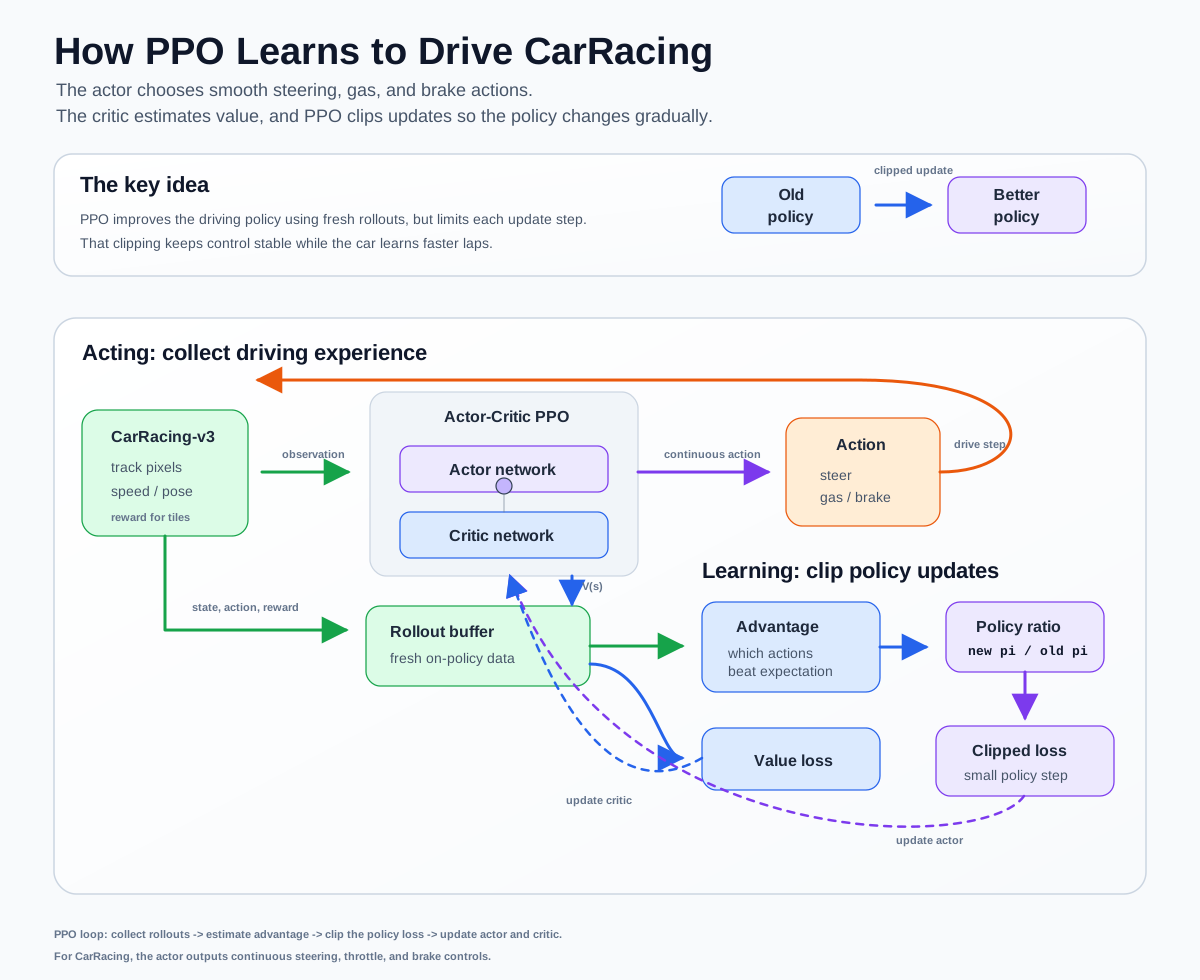
PPO is an on-policy algorithm that simplifies the trust region optimization used in algorithms like TRPO. It is particularly known for its stability and robustness in environments with continuous action spaces.
Implementation:
Performance in Car Racing:
- Strengths: PPO performs well in continuous action environments like Car Racing due to its ability to adjust policies incrementally, avoiding drastic changes that could destabilize training.
- Weaknesses: Being an on-policy algorithm, PPO may require more data compared to off-policy methods like SAC, making it less sample-efficient.
PPO in Practice:
In Car Racing, PPO effectively balances exploration and exploitation. The clipping mechanism in PPO prevents large policy updates, making it a reliable choice for environments where the control needs to be smooth and steady.
Soft Actor-Critic (SAC)
SAC is an off-policy algorithm that utilizes both entropy maximization and the actor-critic framework, promoting exploration by encouraging the agent to act as randomly as possible while learning.
Implementation:
Performance in Car Racing:
- Strengths: SAC is highly sample-efficient, making it suitable for environments like Car Racing where actions are continuous and precise control is necessary.
- Weaknesses: The algorithm is more complex to implement and requires careful tuning, particularly of the temperature parameter, which balances exploration and exploitation.
SAC in Practice:
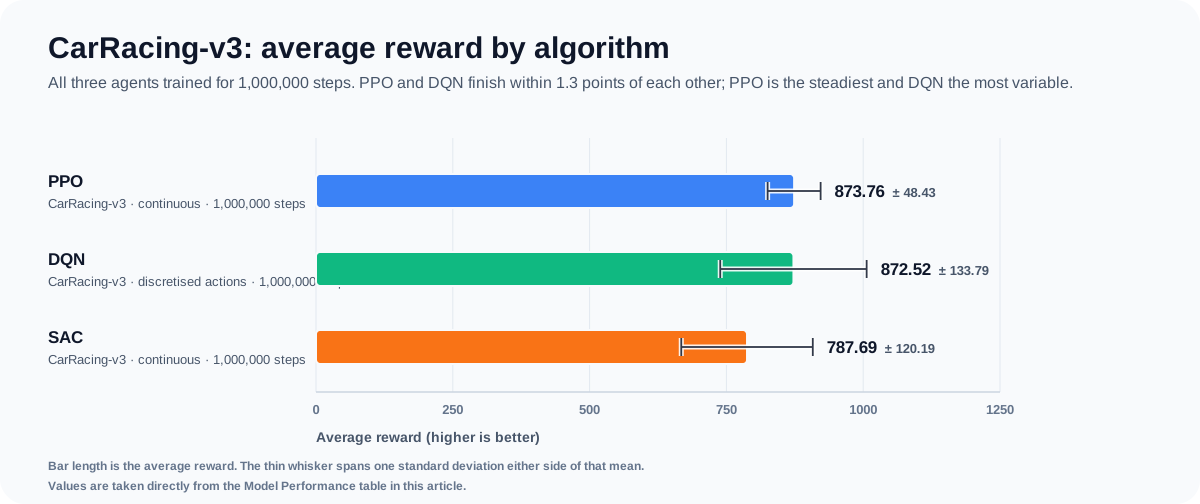
SAC's entropy-driven exploration is designed to help an agent discover varied strategies and adapt to changes in the track. On this task it did not pay off: SAC scored lowest of the three at the same 1,000,000-step budget, roughly 86 points below PPO. The entropy bonus that aids exploration elsewhere appears to keep the policy noisier than CarRacing rewards, and the temperature parameter is the first thing worth tuning if you want to close that gap.
Deep Q-Network (DQN)
DQN is a pioneering algorithm in the RL domain, particularly effective in discrete action spaces. It uses a neural network to approximate the Q-values for action-value estimation.
Implementation:
Performance in Car Racing:
- Strengths: DQN is simple and effective in environments with discrete actions, with relatively lower computational demands.
- Weaknesses: It is less suited for continuous action spaces like Car Racing. The need for discretization of actions can lead to suboptimal policies and reduced performance.
DQN in Practice:
Applying DQN here means discretizing the steering, throttle and brake commands into a fixed set of actions, which in principle throws away the fine control the task rewards. In practice that cost far less than expected: the discretized DQN run finished within 1.3 points of PPO on average reward. What it did give up was consistency — its spread across evaluation episodes was the widest of the three, so a given episode is much less predictable than PPO's.
Comparison of Algorithms
PPO:
- Strengths: Stable and performs well in environments with continuous action spaces due to its policy gradient approach.
- Weaknesses: As an on-policy algorithm, it can be less sample-efficient, requiring more interactions with the environment.
SAC:
- Strengths: Highly sample-efficient and excels in continuous action spaces. The use of entropy maximization leads to robust exploration.
- Weaknesses: More complex to implement and tune, especially with respect to the entropy coefficient.
DQN:
- Strengths: Simplicity and effectiveness in discrete action environments. Less computationally intensive than some policy-based methods.
- Weaknesses: Struggles in high-dimensional and continuous action spaces without significant modifications.
Conclusions
PPO is the clear pick for this environment. It scored highest at 873.76 and, more importantly, was by far the steadiest — its spread of ±48.43 is about a third of DQN's, so it is the run you would trust on an unseen track.
The more interesting result is DQN. Theory says a discretized action space should struggle on a continuous control task, and yet DQN landed at 872.52 — a gap of 1.24 points, far smaller than either run's episode-to-episode spread. The penalty showed up as variance rather than as a lower score: at ±133.79 it was the least consistent of the three. So discretization is not disqualifying here, it just buys a noisier policy.
SAC is the one that underperformed, at 787.69 ± 120.19. That runs against its reputation on continuous-control benchmarks and is worth reading as a statement about this configuration rather than about the algorithm — with entropy-coefficient tuning or a longer budget it may well close the gap. Taken together, the run ranks PPO first on both score and reliability, DQN a close second on score alone, and SAC third.
Additional Learning Materials
- Applying a Deep Q Network for OpenAI's Car Racing Game
- Control CartRacing-v2 environment using DQN from scratch
- Gymnasium Documentation - Car Racing
- Solving Car Racing with Proximal Policy Optimization
Code Repository and Models
Best Models - Car Racing v3
Proximal Policy Optimization (PPO)
Deep Q-Network (DQN)
Soft Actor-Critic (SAC)
Model Performance
| Environment | Model Type | Average Reward | Total Training Steps | HuggingFace | Google Colab |
|---|---|---|---|---|---|
| CarRacing-v3 | PPO | 873.76 +/- 48.43 | 1,000,000 | View Model | View Colab |
| CarRacing-v3 | SAC | 787.69 +/- 120.19 | 1,000,000 | View Model | View Colab |
| CarRacing-v3 | DQN | 872.52 +/- 133.79 | 1,000,000 | View Model | View Colab |